How Credit Card Interest Is Calculated Step by Step (2026 Expert Guide)
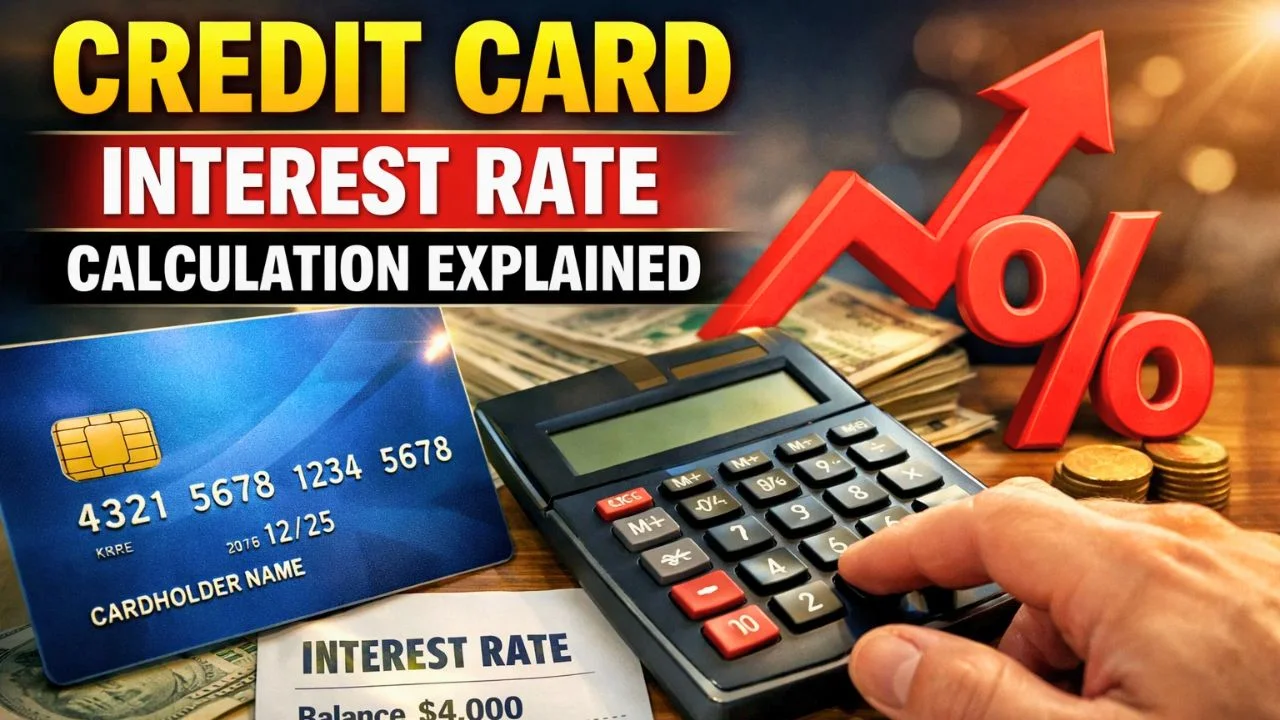
If you’ve ever looked at your credit card statement and thought, “That interest charge makes no sense — I barely carried a balance,” you’re not alone. I’ve seen this exact frustration repeat for years. The real issue isn’t irresponsibility — it’s that credit card interest is calculated using rules most people are never clearly taught.
This article explains how credit card interest is calculated step by step, using the same logic issuers use, without fluff or recycled explanations. My goal is simple: once you finish reading, interest charges should feel predictable — not mysterious or unfair.
TL;DR: The 30-Second Expert Verdict
Credit card interest is calculated daily, not monthly. Your APR is converted into a daily rate, applied to your average daily balance, and compounded throughout the billing cycle. Paying late — or paying only after the statement closes — means interest still accrues. The only reliable way to avoid interest is paying the full statement balance before the due date, every cycle.
Why Most People Misunderstand Credit Card Interest (My Observation)
The most common mistake I’ve observed isn’t overspending — it’s timing. People assume interest works like a simple monthly percentage. In reality, credit cards use daily math, balance averaging, and compounding rules that quietly punish delays.
This misunderstanding became more costly in 2025–2026 as average APRs climbed above 23%, according to Federal Reserve consumer credit data. When rates are that high, even small timing errors get expensive fast.
Step 1: Start With Your APR (Annual Percentage Rate)
Your APR is the annual interest rate your card charges on purchases. Most cards list multiple APRs:
- Purchase APR
- Cash advance APR (higher)
- Penalty APR (after missed payments)
We’re focusing on purchase APR, since that affects everyday spending.
Example:
- Purchase APR: 24.99%
Important: APR is not what you’re charged monthly. It’s only the input for the real calculation.
(Authoritative reference: Consumer Financial Protection Bureau explains how APR feeds into daily interest calculations.)
Step 2: Convert APR Into a Daily Periodic Rate
Credit card issuers divide your APR by 365 days.
Example:
- 24.99% ÷ 365 = 0.06846% per day (0.0006846)
This number looks tiny — and that’s why people underestimate it. But it’s applied every single day you carry a balance.
Step 3: Calculate the Average Daily Balance (The Hidden Driver)
This is the step most articles gloss over — and where most interest surprises come from.
Issuers calculate interest using your average daily balance, not your ending balance.
Here’s how it works:
- Your balance is recorded at the end of each day
- All daily balances are added together
- The total is divided by the number of days in the billing cycle
That result is the number interest is based on.
A mistake I see constantly
Someone pays down a large balance a day or two before the due date and expects interest to drop sharply.
It doesn’t — because the balance was high for most of the cycle.
(Visual suggestion: Add a simple timeline graphic showing daily balances across a billing cycle.)
Step 4: Apply the Daily Interest Formula
The issuer now calculates interest using this formula:
Average Daily Balance × Daily Rate × Number of Days
Example:
- Average Daily Balance: $1,200
- Daily Rate: 0.0006846
- Billing Cycle: 30 days
Interest = $1,200 × 0.0006846 × 30 = $24.65
That interest is added to your balance — and immediately starts earning interest itself.
Step 5: Understand Daily Compounding (Where Costs Accelerate)
Credit card interest compounds daily. This means:
- Yesterday’s interest becomes part of today’s balance
- Today’s interest is calculated on a slightly larger amount
Over time, this creates a compounding effect that feels invisible — until balances linger for months.
According to CFPB consumer education materials, daily compounding is one of the biggest reasons balances take longer to pay off than expected.
Myths vs Facts About Credit Card Interest
| Myth | Fact |
|---|---|
| Interest is charged monthly | Interest is calculated daily |
| Paying the minimum avoids interest | Interest continues unless the statement balance is paid in full |
| Small balances don’t matter | High APRs make small balances costly |
| Due date controls interest | Statement closing date matters just as much |
The Grace Period: Your Only Interest-Free Window
Most cards offer a grace period — but only if you qualify.
If you pay your full statement balance by the due date:
- Purchases avoid interest
- Daily compounding does not apply
The moment you carry a balance, the grace period disappears — often until the balance is fully cleared.
Visa’s official cardholder education confirms that grace periods are conditional, not guaranteed.
Cash Advances: Why Interest Starts Immediately
Cash advances are calculated differently:
- Interest begins the same day
- APRs are significantly higher
- Upfront fees apply
There is no grace period. I’ve seen cash advances turn short-term problems into long-term debt faster than almost any other card feature.
2025–2026 Reality Most People Missed
Based on Federal Reserve G.19 data and issuer disclosures:
- Average purchase APRs exceeded 23%
- Penalty APRs near 30% became common
- Issuers tightened grace-period forgiveness
This shift means understanding interest math isn’t optional anymore — it’s basic financial defense.
(Visual suggestion: Add a line chart showing APR growth from 2020–2026.)
How to Reduce Credit Card Interest in Practice
From real-world patterns I’ve observed:
- Pay balances before the statement closes, not just before the due date
- Avoid carrying balances across billing cycles
- Never rely on cash advances unless unavoidable
- Track your statement closing date — not just the payment date
Small timing changes beat aggressive payoff plans.
My Personal Recommendation: Who This Is For — and Who Should Skip It
This guide is for you if:
- You occasionally carry balances
- Interest charges feel unpredictable
- You want control, not surprises
You can skip this if:
- You always pay the statement balance in full
- You never use cash advances
- You already track billing cycles closely
Honesty builds trust — not every reader needs the same depth.





Post Comment