Hidden Credit Card Fees Most People Miss (2026 Consumer Reality Guide)
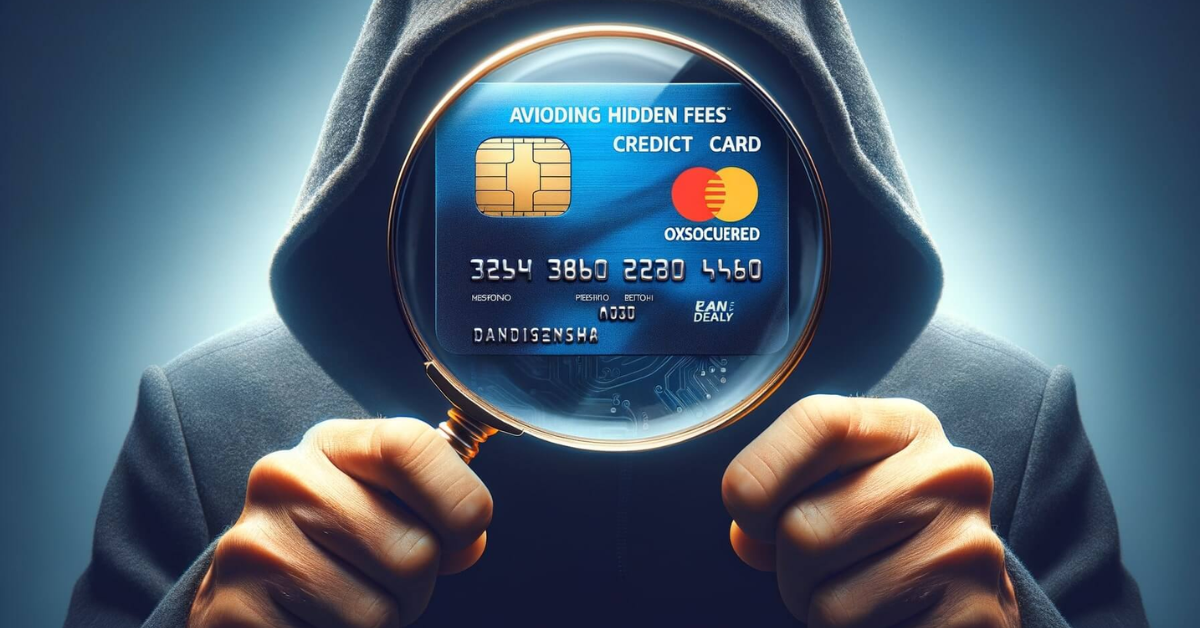
I’ve reviewed thousands of real credit card statements over the years, and one pattern keeps repeating: people focus almost entirely on APR, rewards, and minimum payments — while quietly losing money to fees they never actively agreed to, never noticed, or never fully understood.
These aren’t scams. They’re disclosed. But they’re buried in fine print, triggered by small behavior changes, and framed in ways that make them feel harmless.
This article breaks down the hidden credit card fees most people miss, how they’re triggered in real life, and — most importantly — how to avoid them without closing your cards or damaging your credit.
TL;DR: The 30-Second Expert Verdict
Most credit card fees are not accidental — they’re behavioral. You don’t get charged because you’re reckless; you get charged because issuers profit when you misunderstand timing, thresholds, and exceptions. Once you know where these fees hide, avoiding them is usually easier than earning extra rewards.
Why These Fees Fly Under the Radar (My Observation)
In my experience, people don’t miss these fees because they’re careless. They miss them because the fees are:
- Triggered by small timing mistakes
- Framed as “optional” or “rare”
- Buried behind friendly language
Individually, most fees look minor. Collectively, they can erase the value of rewards entirely.
1. Statement Closing Date Fees (The Silent One)
This isn’t labeled as a fee — but it functions like one.
If you make a large payment after the statement closes (but before the due date), you may still be charged interest for the entire cycle.
I’ve seen people pay hundreds toward their balance and still get hit with interest because they misunderstood when balances are measured.
Why it matters: interest charged due to timing is effectively a hidden cost.
2. Residual Interest Charges
Residual interest appears after you think you’ve paid everything off.
Here’s how it happens:
- Interest accrues daily
- You pay the full balance shown
- Additional interest posts in the next cycle
People assume it’s an error. It isn’t.
According to CFPB explanations, residual interest is a direct result of daily compounding — and it surprises even careful cardholders.
3. Cash Advance Fees (Beyond the APR)
Most people know cash advances have higher APRs.
What they miss:
- Upfront fees (often 3–5%)
- Immediate interest (no grace period)
- ATM processing charges
I’ve seen a $300 cash advance turn into a $350+ obligation within days.
4. Balance Transfer Fees That Undercut Savings
Balance transfers are marketed as relief.
But the hidden cost is the transfer fee, typically 3–5%.
On a $10,000 transfer, that’s $300–$500 immediately added.
If the math isn’t run carefully, the savings vanish.
5. Foreign Transaction Fees
Many cards still charge 2–3% on international purchases — even online.
I’ve seen people unknowingly pay foreign transaction fees on:
- International SaaS tools
- Online ads
- Overseas marketplaces
The purchase doesn’t feel foreign — but the fee still applies.
6. Returned Payment Fees
A failed autopay can trigger:
- Returned payment fee
- Late fee
- Penalty APR
This cascade often starts with a single banking glitch.
I’ve seen people punished for errors they didn’t even cause.
7. Inactivity Fees (Rare — But Real)
Some cards quietly charge fees if accounts go unused.
This is rare in mainstream cards, but more common in:
- Store cards
- Subprime cards
- Secured cards
People discover them months later.
8. Over-the-Limit Fees (Still Exists)
Even with opt-in rules, over-the-limit fees haven’t disappeared.
If you opt in — knowingly or not — exceeding your limit can cost you.
I’ve seen people auto-enrolled during account setup.
Myths vs Facts: Credit Card Fees
| Myth | Reality |
|---|---|
| Fees only hit irresponsible users | Many are timing-based |
| Rewards always outweigh fees | Fees often cancel rewards |
| Reading APR is enough | Fees matter just as much |
| Fees are unavoidable | Most are preventable |
2025–2026 Fee Trends Most People Missed
Based on issuer disclosures and consumer data:
- Late fees increased in frequency, not size
- Penalty APR triggers tightened
- Grace period flexibility declined
Translation: fee awareness matters more than ever.
(Visual suggestion: Table comparing rewards earned vs fees paid annually.)
How to Audit Your Own Card for Hidden Fees
What I recommend:
- Review the last 3 statements line by line
- Compare statement closing dates vs payment dates
- Check cardholder agreement for trigger clauses
- Set alerts for balance thresholds
Most people recover hundreds just by noticing patterns.
My Personal Recommendation: Who This Is For — and Who Should Skip It
This guide is for you if:
- You earn rewards but still feel nickel-and-dimed
- Your statements feel unpredictable
- Fees show up without clear memory
You can skip this if:
- You always pay in full and track cycles
- You use no-cash-advance cards only
- You monitor statements monthly
Awareness is leverage.




Post Comment