Finance Charges on Credit Cards: Easy Examples to Understand What You’re Really Paying
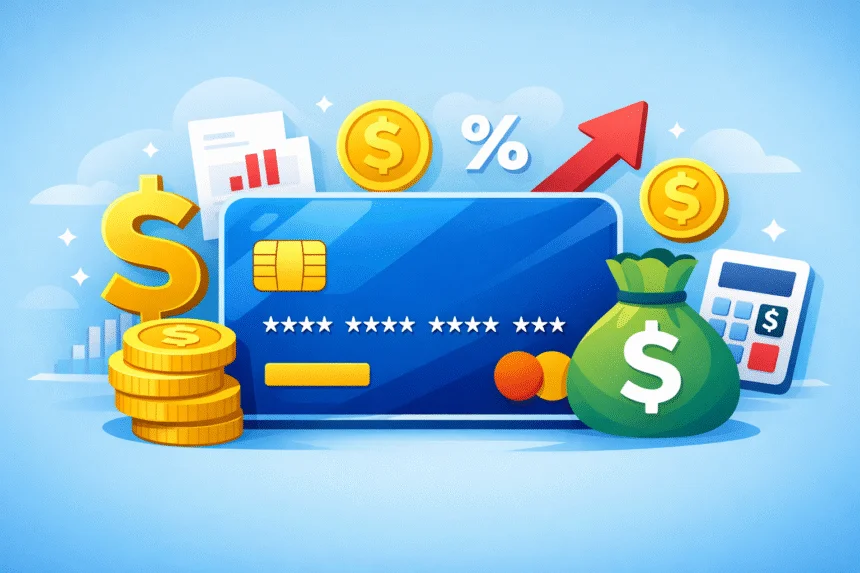
If you’ve ever looked at your credit card statement and thought, “I didn’t buy anything extra—so why does my balance keep growing?” you’re not alone.
From my observation, the biggest frustration people have with credit cards isn’t overspending — it’s not understanding finance charges. Many users assume interest is charged only when they miss a payment, or they believe paying the “minimum due” protects them from extra costs. That misunderstanding quietly drains money every single month.
This article breaks down finance charges on credit cards using plain language and real examples, so you can see exactly how they’re calculated, when they apply, and how to avoid them.
🔹 TL;DR: The 30-Second Expert Verdict
Finance charges are the interest and fees a credit card issuer adds when you carry a balance, take a cash advance, or miss payments.
They’re usually calculated daily based on your APR and average daily balance. Paying your full statement balance by the due date is the simplest way to avoid most finance charges entirely.
Why Finance Charges Confuse So Many Cardholders
I’ve seen this pattern repeatedly:
People focus on the APR percentage, but ignore how interest is applied.
A card with “only” 24% APR doesn’t sound dangerous — until you realize:
- Interest compounds daily
- Minimum payments barely touch the principal
- Some transactions start charging interest immediately
Finance charges feel invisible because they’re spread out in small amounts — but over time, they add up to hundreds or even thousands of dollars.
This article solves three common pain points:
- What finance charges actually include
- How they’re calculated (with numbers)
- How to reduce or eliminate them
What Are Finance Charges on a Credit Card?
A finance charge is the total cost of borrowing money on your credit card.
It may include:
- Interest on purchases
- Interest on cash advances
- Balance transfer interest
- Late payment fees
- Certain account-related fees
In most cases, interest makes up the largest portion.
According to the U.S. Consumer Financial Protection Bureau, finance charges represent the cost of consumer credit expressed in dollar terms, not percentages — which is why people underestimate them.
Authoritative reference: Consumer Financial Protection Bureau (CFPB)
https://www.consumerfinance.gov
What Finance Charges Are NOT
To clear a major misconception:
Finance charges are not:
- Your purchase amount
- A one-time penalty
- The same as your APR
- Automatically applied to every transaction
APR is the rate.
Finance charges are the actual dollars you pay because of that rate.
How Credit Card Finance Charges Are Calculated
Most credit cards use the Average Daily Balance (ADB) method.
Here’s how it works in simple terms:
- Your balance is recorded each day
- All daily balances are added together
- The total is divided by the number of days in the billing cycle
- Daily interest is applied using your APR
The Formula (Simplified)
Average Daily Balance × Daily Interest Rate × Number of Days
Daily interest rate = APR ÷ 365
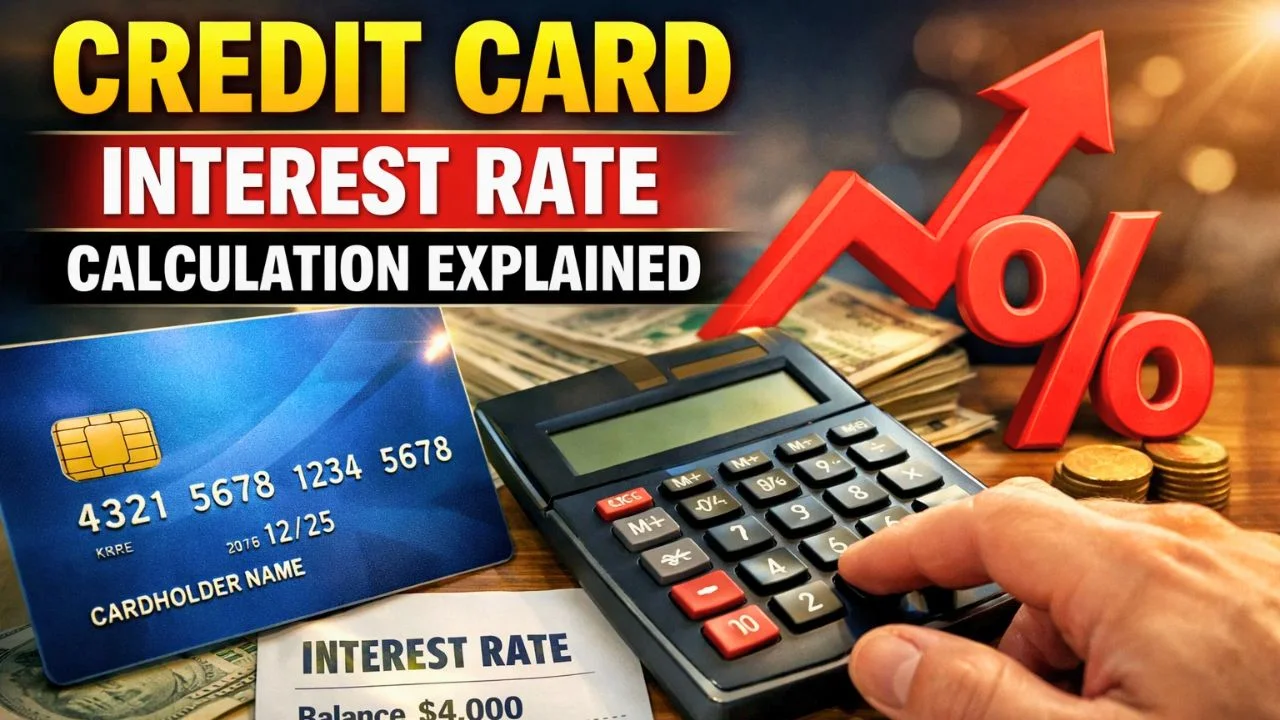
Easy Example #1: Finance Charges on Purchases
Let’s say:
- Balance: $1,000
- APR: 24%
- Billing cycle: 30 days
Daily rate:
24% ÷ 365 = 0.0658% per day
Finance charge:
$1,000 × 0.000658 × 30 = $19.74
➡️ Even without new purchases, you paid $19.74 just for carrying the balance.
Easy Example #2: Paying Only the Minimum
This is where people lose the most money.
Assume:
- Balance: $3,000
- APR: 22%
- Minimum payment: $75
After the payment:
- Interest absorbs most of it
- Principal barely decreases
Over one year:
- You may pay $600+ in interest
- Balance might still be over $2,700
This is why minimum payments feel like running on a treadmill.
Easy Example #3: Cash Advance Finance Charges
Cash advances are one of the most expensive credit card features.
Typical terms:
- APR: 28%–30%
- No grace period
- Upfront cash advance fee (3%–5%)
Example:
- Cash advance: $500
- Fee (5%): $25
- Immediate balance: $525
Interest starts the same day.
After 30 days at 29% APR:
You owe ≈ $538
Authoritative reference: Federal Reserve — Credit Card Cost Structures
https://www.federalreserve.gov
Where Most People Make a Costly Mistake
From what I’ve seen, the biggest mistake is assuming:
“If I pay something, interest stops.”
It doesn’t.
Interest continues until:
- The entire statement balance is paid
- Or the balance is fully cleared
Partial payments reduce interest slowly — not immediately.
Grace Periods: The Hidden Line Between Free and Costly
A grace period is the time between your statement closing date and payment due date.
If you:
- Pay 100% of the statement balance
- Before the due date
➡️ No interest is charged on purchases
If you don’t:
- Grace period disappears
- Interest applies daily
Not all transactions qualify:
- Cash advances ❌
- Some balance transfers ❌
Decision Table: Finance Charges — Do vs Don’t
| Do | Don’t |
|---|---|
| Pay full statement balance | Rely on minimum payments |
| Understand APR type | Assume all APRs are equal |
| Avoid cash advances | Treat them like ATM withdrawals |
| Track statement dates | Focus only on due dates |
| Read fee disclosures | Ignore fine print |
This table alone can save more money than switching cards.
Why Finance Charges Feel “Small” But Hurt Long-Term
Finance charges are dangerous because:
- They’re incremental
- They compound
- They don’t trigger alerts
I’ve seen users lose more money to interest over five years than the value of everything they purchased.
This is why banks earn billions annually from revolving balances — not late fees.
Can Finance Charges Be Avoided Completely?
Yes — in most everyday use cases.
You can avoid finance charges if:
- You pay the full balance every month
- You avoid cash advances
- You understand promotional APR expiration dates
However, if you revolve balances regularly, finance charges become unavoidable — and should be planned for, not ignored.
My Personal Recommendation: Who This Is For — and Who Should Skip It
This article is ideal for:
- New credit card users
- Anyone carrying a balance
- People confused by statements
- Users trying to reduce debt faster
You may skip or skim if:
- You already pay balances in full monthly
- You only use charge cards
- You never use cash advances
Understanding finance charges matters most when money is tight — not when everything is going well.





Post Comment